

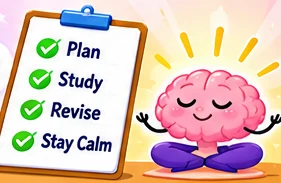
Beating Exam Stress
A little stress helps you focus. Too much gets in the way. Smart study habits, a calm body and someone to talk to make all the difference.
 Class 6 to 10
 9 min read
 5 sections
Story time
 Story time
A week before the exam, Riya panics: “I'm so stressed!” Kabir says, “Let's plan together.” Ms. Rao gives them simple tips: make a study plan, take short breaks, get enough sleep, stay active and eat well. Riya follows the plan all week, and on exam day she walks in calm and ready.
Key words
 Key words
Read these words first. They will help you understand the article.


1What stress does
- 1ChallengeYour brain sees the exam as something important.
- 2AlarmIt releases adrenaline to get you ready.
- 3Body reactsFaster heartbeat, quick breathing, butterflies in your tummy.
- 4FocusA little stress sharpens attention. Too much makes it hard to think.
 4
Feeling nervous before exams is normal and even useful. The goal isn't zero stress. It's keeping it at a level that helps you rather than freezes you.
2Notice the signsPart 1 of 2
 Notice the signs
In your body
- Headaches or stomach aches
- Trouble falling asleep
- Feeling tired all the time
- Eating much more or much less
In your mind
- Worrying thoughts that won't stop
- Finding it hard to concentrate
- Getting irritated easily
- Feeling like giving up
2Notice the signsPart 2 of 2
3Study smarter, not longerPart 1 of 3
 25 + 5
Make a simple timetable that includes breaks, meals and sleep. Start with the topics you find hardest while your mind is fresh, and finish each day by testing yourself on one thing you learned.
3Study smarter, not longerPart 2 of 3
- 1PlanA small daily study schedule, one topic at a time.
- 2PractiseRevise and solve sample questions without looking.
- 3BalanceSleep enough, eat well and take short breaks.
 2
 3
3Study smarter, not longerPart 3 of 3
4Calm body, calm mindPart 1 of 2
- 1Breathe inSlowly through your nose for 4 counts.
- 2HoldGently hold your breath for 4 counts.
- 3Breathe outSlowly through your mouth for 4 counts.
- 4RepeatHold for 4, then repeat 4 times.
 1
 2
 3
 4
4Calm body, calm mindPart 2 of 2
Do
- Sleep 8 to 10 hours, especially the night before
- Eat regular meals and drink water
- Move every day: a walk, a game, stretching
Don’t
- Stay up all night before an exam
- Survive on energy drinks or skip meals
- Compare your marks with everyone online
5You don't have to do it alonePart 1 of 2
 You don't have to do it alone
Talking helps. A parent, teacher, school counsellor or friend can help you make a plan or simply listen. If worry stops you sleeping, eating or enjoying anything for more than a couple of weeks, tell a trusted adult. Asking for help is a strong thing to do.

Your friend has stopped eating lunch, barely talks, and says they feel they can't cope with the exams.
5You don't have to do it alonePart 2 of 2
Quick summary
 Quick summary
- A little stress helps you focus; too much makes it hard to think.
- Learn your body and mind signs so you can act early.
- Test yourself, space out revision and take short breaks.
- Box breathing, sleep, food and movement calm your body.
- Talk to a trusted adult. Tele-MANAS (14416) is free, any time.

Remember: Plan well, practise regularly, keep a healthy routine and stay positive.
Think and discuss
Talk about it
 Talk about it
- What made Riya feel stressed, and what helped her most?
- Which study tip will you try first, and why?
- Who could you talk to if exam worry feels too big?
Quick check
 Quick check
- Name two signs of stress in the body.
- What is active recall?
- Why does sleep matter before an exam?

Make a one-week exam plan for a pretend test: break the syllabus into small daily parts, add breaks and a fixed bedtime, and share one calming trick that works for you.

Ready for the quiz?
6 questions, one at a time. Your first answer counts, so think before you tap!
Parent advice
 Parent advice
A few minutes together at home makes this lesson stick.

Talk about it
Ask “How are you feeling about the exams?” and listen without jumping to advice. Share a time you felt nervous and what helped. Make it clear that your love doesn't depend on marks.
Try at home
Make a revision timetable together with breaks, meals, exercise and 8 to 10 hours of sleep built in. Practise box breathing as a family. Save Tele-MANAS (14416) in your phone, and talk to the school counsellor if worries last more than a couple of weeks.
