
Climate Change: What's Really Happening
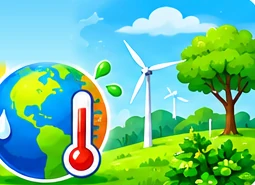
Our planet is warming because of the gases we release. Understanding why is the first step to fixing it.
 Class 6 to 10
 10 min read
 5 sections
Story time
 Story time
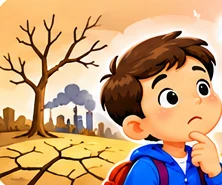
On a scorching afternoon, Riya and Kabir walk past dry, cracked ground. “Why is it getting hotter every year?” asks Kabir. Their science teacher explains how smoke from factories and vehicles and the cutting of trees are heating the planet, and what people can do about it. That weekend, the two of them plant a sapling near school.
Key words
 Key words
Read these words first. They will help you understand the article.


1Weather or climate?Part 1 of 3
 Weather or climate?
A rainy Monday tells you about the weather. Climate is the pattern over 30 years or more: how hot summers usually get, when the monsoon usually arrives, how much rain falls in a year. Climate change means those long-term patterns are shifting, mainly because the whole planet is getting warmer.
1Weather or climate?Part 2 of 3
Weather
 Weather
- What the sky is doing today or this week
- Changes hour by hour
- Example: “It will rain in Pune tomorrow”
Climate
- The average pattern over decades
- Changes slowly, over many years
- Example: “Rajasthan has hot, dry summers”
1Weather or climate?Part 3 of 3
2The greenhouse effectPart 1 of 2
- 1Sunlight inSunlight passes through the air and warms the land and sea.
- 2Earth glowsThe warm Earth sends heat back out towards space.
- 3Gases trap itGreenhouse gases absorb some of that heat and send it back down.
- 4More gas, more heatThe more gas we add, the more heat stays and the warmer it gets.
A natural greenhouse effect keeps Earth warm enough for life. The problem is the extra gas from burning coal, oil and gas for electricity, vehicles and factories, and from cutting down forests that would soak up carbon dioxide.
2The greenhouse effectPart 2 of 2
3What it means for IndiaPart 1 of 2
 What it means for India
India is one of the countries most affected by climate change, because so many people depend on the monsoon, farming and coastal cities.
 Rising seas
3What it means for IndiaPart 2 of 2
4How we can fix itPart 1 of 3
Mitigation: cut the causes
- Clean electricity from sun and wind
- Public transport, walking, cycling
- Protect forests, waste less
Adaptation: prepare for changes
- Shade and heat-health plans
- Flood planning and storing water
- Crops that cope with heat and drought
4How we can fix itPart 2 of 3
What countries do
 What countries do
- Build solar and wind power instead of coal
- Switch to electric buses and trains
- Protect forests and plant new ones
- Agree on targets together, like the Paris Agreement
What you can do
 What you can do
- Walk, cycle or take the bus when you can
- Switch off lights and fans you are not using
- Waste less food and reuse things
- Talk about it and ask leaders to act
4How we can fix itPart 3 of 3
5Myths and factsPart 1 of 2
 Myths and facts
5Myths and factsPart 2 of 2
Quick summary
 Quick summary
- Weather is day to day; climate is the long-term pattern over decades.
- Greenhouse gases trap heat. Burning coal, oil and gas adds more of them.
- Earth has warmed by more than 1°C, bringing stronger heatwaves, floods and rising seas.
- India faces heat, changing monsoons, rising seas and shrinking glaciers.
- Clean energy, forests and everyday choices together can slow the warming.

Remember: Understand the science, cut emissions and prepare for changing conditions.
Think and discuss
 Think and discuss
Talk about it
- How is weather different from climate?
- Why is the natural greenhouse effect important for life?
- Give one mitigation action and one adaptation action for your town.
Quick check
 Quick check
- Name two greenhouse gases.
- Explain the greenhouse effect in your own words.
- What is the difference between mitigation and adaptation?

Make a two-column climate plan for your school: “Cut the causes” and “Prepare for changes”. Write at least three realistic actions in each column and vote on one to try this month.

Ready for the quiz?
6 questions, one at a time. Your first answer counts, so think before you tap!
Parent advice
 Parent advice
A few minutes together at home makes this lesson stick.


Talk about it
Ask your child what they noticed about this year's summer or monsoon, and share how weather was when you were young. Keep the talk hopeful: the problem is serious, but people already know how to fix much of it.
Try at home
Do a family “energy hunt” for one week: list lights, fans and devices left on when no one is using them, and make a simple switch-off chart. Check next month's electricity bill together to see the difference.
