
How Vaccines Protect Us
A vaccine is a safe practice run for your immune system, so it is ready if the real germ ever arrives.
 Class 6 to 10
 9 min read
 5 sections
Story time
 Story time
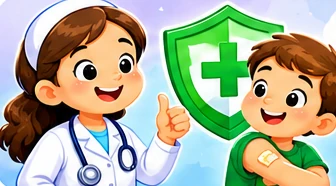
Kabir spent a week in bed with a fever, and Riya missed playing with him. At the clinic, the doctor explains that a vaccine is like a practice drill: it teaches the body's defence team to recognise a germ, so it can fight back fast if the real germ ever comes. Kabir gets his vaccine with a thumbs-up, just a small pinch!
Key words
 Key words
Read these words first. They will help you understand the article.


1Your body's defence team
Germs such as viruses and bacteria try to enter your body every day. Your immune system is an army of cells that spots invaders and fights them. Best of all, it remembers germs it has met, so the next attack is beaten faster.
- 1Germ entersA virus or bacterium gets in through the nose, mouth or a cut.
- 2SpottedImmune cells recognise it as a stranger.
- 3FightThe body makes antibodies that target that exact germ.
- 4RememberMemory cells stay ready in case it ever comes back.
 1
 2
2How a vaccine worksPart 1 of 3
A vaccine shows your immune system a harmless copy or part of a germ, or instructions to make one piece of it. Your body practises making antibodies and memory cells without you having to get sick first.
2How a vaccine worksPart 2 of 3
Getting the disease
 Getting the disease
- You may become very ill
- You can pass it on to others
- Some diseases cause lasting harm
Getting the vaccine
- Your body learns safely
- Mild sore arm or slight fever at most, for most people
- Protection is ready before the germ arrives
2How a vaccine worksPart 3 of 3
3Protecting everyone
Some people, such as newborn babies or people with certain illnesses, can't be vaccinated. When most people around them are protected, the germ has nowhere to spread, so they are protected too. This is called herd immunity.
 1980
 2014
4Are vaccines safe?Part 1 of 2
Before a vaccine is used, it is tested in the lab and then in thousands of volunteers in stages, and checked by independent experts. Even after approval, doctors keep watching for rare side effects. Most side effects are mild and pass in a day or two.
4Are vaccines safe?Part 2 of 2
What to expect: a quick pinch, and sometimes a sore arm, tiredness or a mild fever for a day or two. These are signs the body is building protection. Nurses and doctors explain what is normal and when to come back, so ask them your questions.
5Think and choosePart 1 of 2
 Think and choose

A forwarded message says a vaccine your little cousin is due for is “dangerous” and gives no source.
5Think and choosePart 2 of 2
Quick summary
 Quick summary
- Your immune system fights germs and remembers them.
- A vaccine lets your body practise safely, without getting sick first.
- When most people are vaccinated, those who can't be are protected too.
- Vaccines ended smallpox worldwide and helped India become polio-free in 2014.
- Check health claims with doctors and official sources.

Remember: Vaccines train your defences and help protect you and everyone around you.
Think and discuss
Talk about it
- How does a vaccine help the immune system practise?
- How can vaccination protect a whole community, not just one person?
- What questions could you ask the nurse before a vaccine?
Quick check
- What does the immune system do?
- What is immune memory?
- Why are vaccines important for communities?

Draw a three-step science diagram: the vaccine brings a harmless “training signal” → the immune system learns → later, it reacts faster to the real germ. Use friendly shapes, not scary germs. Do not share anyone's medical details in class.

Ready for the quiz?
6 questions, one at a time. Your first answer counts, so think before you tap!
Parent advice
A few minutes together at home makes this lesson stick.


Talk about it
Find your child's vaccination card and go through it together. Explain which diseases each vaccine prevents, and share any memories of pulse polio days or of illnesses that are now rare.
Try at home
Check whether any vaccines are due for your child (for example, at age 10 and 16 under India's schedule) and book them with your doctor. Ask your child to write down one question for the doctor.
