
Our Constitution: Your Rights and Duties
The Constitution is India's rulebook. It gives every citizen rights and asks every citizen to do their part.
 Class 6 to 10
 10 min read
 5 sections
Story time
 Story time
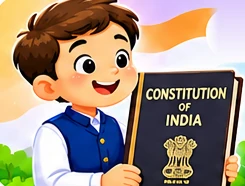
At the Republic Day assembly, Riya asks why 26 January is so special. The teacher holds up the Constitution of India and explains that it came into force on that day in 1950. Back in the park, Kabir drops a wrapper and Riya reminds him: our rights come with duties. Together they say, “Know our rights, fulfil our duties, build a better India!”
Key words
 Key words
Read these words first. They will help you understand the article.


1India's rulebook
After independence, India needed rules for how the country would be run, who makes laws and what freedoms people have. A Constituent Assembly of elected members debated every line. Dr B. R. Ambedkar led the committee that drafted it.
 26 Jan 1950
 ~3 years
2The Preamble's four big ideas
The Preamble begins with “We, the people of India”. It says power comes from the people, and it promises every citizen four things.
- 1JusticeFair treatment in society, the economy and politics.
- 2LibertyFreedom of thought, expression, belief and worship.
- 3EqualityThe same status and the same chances for everyone.
- 4FraternityA sense of brotherhood that keeps the nation united.
 2
 3
3Your six Fundamental RightsPart 1 of 2
 Against exploitation
3Your six Fundamental RightsPart 2 of 2
 Religion
 Constitutional remedies
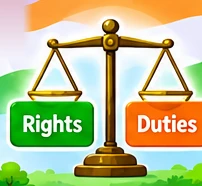
4Rights come with dutiesPart 1 of 2
Rights give you
- Freedom to speak your mind
- Equal treatment
- The right to education
- Protection by the courts
Duties ask you to
- Respect the Constitution, flag and anthem
- Protect the environment and public property
- Promote harmony and respect women
- Develop a scientific, questioning mind
4Rights come with dutiesPart 2 of 2
Duties do not take rights away, and rights are not a reward for good behaviour. Everyone has them. Duties remind us to care for each other and for the country: keep shared spaces clean, look after public property, respect others and solve disagreements peacefully.
5The Constitution in your lifePart 1 of 2

You notice that a 12-year-old boy works all day in a tea shop near your school instead of studying.
5The Constitution in your lifePart 2 of 2
Quick summary
 Quick summary
- The Constitution was adopted on 26 November 1949 and came into force on 26 January 1950.
- Dr B. R. Ambedkar led the committee that drafted it.
- The Preamble promises Justice, Liberty, Equality and Fraternity.
- There are six Fundamental Rights, including the right to go to court to protect them.
- The 11 Fundamental Duties remind us that rights come with responsibilities.

Remember: Know your rights, respect others' rights and act responsibly.
Think and discuss
 Think and discuss
Talk about it
 Talk about it
- Why does India celebrate Republic Day on 26 January?
- Give an example of a right and a matching responsibility at school.
- How can students care for public property?
Quick check
 Quick check
- When did India's Constitution come into force?
- Name one Fundamental Right.
- Name one Fundamental Duty.

Make a class “Rights and Responsibilities” chart. For each right (to learn, to be safe, to be heard) write one way classmates can respect it for each other. Remember: rights do not depend on perfect behaviour.

Ready for the quiz?
6 questions, one at a time. Your first answer counts, so think before you tap!
Parent advice
 Parent advice
A few minutes together at home makes this lesson stick.


Talk about it
On Constitution Day (26 November) or Republic Day, read the Preamble aloud together and talk about what each of the four ideas means in your neighbourhood. Share how you vote and why voting matters.
Try at home
Make a “Rights and Duties” poster for the fridge: one right your child values and one duty the whole family will practise this month, such as keeping your street clean or saving electricity.
