

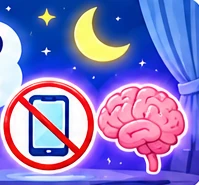
Screens, Sleep and Your Brain
Sleep is when your brain stores what you learned. Late-night screens steal it, so take back control.
 Class 6 to 10
 9 min read
 5 sections
Story time
 Story time
At 10:30 at night, Arjun tells himself, “Just five more minutes…” and keeps gaming. Next morning he yawns through class and can't focus. Ms. Rao explains how too much screen time at night tires the brain and disturbs sleep. Arjun makes a new routine: a screen time limit, 8 to 10 hours of sleep, and more play outside. Soon he feels fresh and ready to learn.
Key words
 Key words
Read these words first. They will help you understand the article.


1Why sleep mattersPart 1 of 2
 Why sleep matters
Sleep is not wasted time. While you sleep, your brain sorts and stores what you learned during the day, your body grows and repairs itself, and your mood resets. Short sleep makes it harder to concentrate, remember and stay calm.
 9–12 hours
1Why sleep mattersPart 2 of 2
2How screens keep you awake
- 1Bright screenLight from the screen reaches your eyes late at night.
- 2“It's daytime!”Your brain thinks it's still day and stays alert.
- 3Less melatoninYour body makes less of the chemical that makes you sleepy.
- 4Late and tiredYou fall asleep later and wake up tired.
 2
It isn't only the light. Endless feeds, autoplay and notifications are designed to keep you watching “just one more”. Exciting games and chats also wake your brain up right when it should be winding down.
3Focus and multitaskingPart 1 of 2
3Focus and multitaskingPart 2 of 2
4A healthy screen planPart 1 of 3
Do
- Switch screens off an hour before bed
- Charge your phone outside the bedroom
- Turn off non-essential notifications
- Study with the phone in another room
Don’t
- Scroll in bed in the dark
- Use your phone as your alarm clock in bed
- Watch “just one more” episode on a school night
Screens aren't the enemy. They help us learn, create and stay in touch. The aim is to choose when you use them, so they don't choose for you.
4A healthy screen planPart 2 of 3
- 1Park the phoneCharge devices outside the bedroom, notifications off.
- 2Wind downRead, stretch or pack your school bag.
- 3Same bedtimeSleep and wake at about the same time daily.
 2
4A healthy screen planPart 3 of 3
5What would you do?
 What would you do?

It's 10:30 pm. You have a maths test tomorrow, and your friends are inviting you to one more online game round.
Quick summary
 Quick summary
- Sleep stores memories, repairs your body and resets your mood.
- Teenagers need 8–10 hours of sleep; ages 6 to 12 need 9–12 hours.
- Bright screens at night cut melatonin and delay sleep.
- Multitasking slows you down; keep your phone away while studying.
- Screens off an hour before bed, and charge the phone outside your room.

Remember: Use screens thoughtfully and give your brain enough rest.
Think and discuss
 Think and discuss
Talk about it
- What kept Arjun awake, and how did it affect his next day?
- How could he prepare for sleep instead?
- Why can late-night studying make learning harder?
Quick check
 Quick check
- Name two reasons sleep is important.
- Give one way screens can delay sleep.
- Suggest one healthy bedtime habit.

Plan a seven-day sleep-and-screen routine: one wind-down activity, a “phone parking” place and a regular wake-up time. Review how you feel after a week. Do not compete with classmates over hours.

Ready for the quiz?
6 questions, one at a time. Your first answer counts, so think before you tap!
Parent advice
 Parent advice
A few minutes together at home makes this lesson stick.


Talk about it
Talk honestly about your own screen habits too. Ask your child which apps are hardest to put down and why. Agree on screen-free times together rather than setting rules only for them.
Try at home
Try a two-week family experiment: all phones charge in the living room from an agreed time, for example 9:30 pm. Each morning, rate how rested everyone feels from 1 to 5 and compare the first and second week.
